Why is my vinyl siding melting? The Science and the Solutions
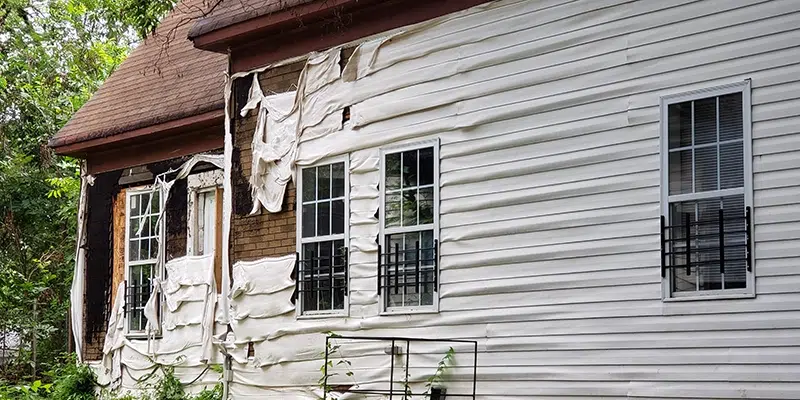
Discovering that your home’s exterior is warping or bubbling can be a distressing experience for any homeowner. You might look at your exterior walls and wonder, “Why is my vinyl siding melting?” despite the weather being relatively mild. This phenomenon is becoming increasingly common in suburban neighborhoods across the country, leaving residents puzzled and frustrated by the sudden degradation of their property’s curb appeal. The issue rarely stems from a single factor, but rather a combination of modern building materials and the laws of physics working against your home’s cladding.
Vinyl siding is prized for its durability, cost-effectiveness, and low maintenance requirements, yet it has a specific Achilles’ heel: heat. While it is designed to withstand the rigors of summer sun, it cannot handle concentrated thermal energy. Understanding the root causes of this distortion is the first step toward finding a permanent solution. Whether the culprit is a neighbor’s window or your own backyard grill, identifying the source of the heat is essential for preventing further damage and planning a successful vinyl siding replacement strategy.
In this exhaustive guide, we will analyze the technical reasons behind vinyl distortion and the environmental factors that accelerate the process. We will explore the science of solar reflection, the limitations of Polyvinyl Chloride (PVC), and the modern architectural trends that have inadvertently created a “magnifying glass” effect on residential streets. By the end of this article, you will have a comprehensive understanding of how to protect your investment and what steps to take if your siding has already succumbed to thermal damage.
The Chemical Composition of Vinyl Siding and Heat Limits
To understand why your home is suffering, you must first understand what vinyl siding actually is. It is primarily composed of Polyvinyl Chloride (PVC) resin, combined with various additives to improve its flexibility, color retention, and impact resistance. Manufacturers design these panels to be resilient, but PVC is a thermoplastic material. This means it can be softened and reshaped when exposed to high temperatures, a property that is useful during manufacturing but detrimental once the product is installed on your house.
Every vinyl product has what engineers call a Heat Distortion Temperature (HDT). For most standard vinyl siding, this threshold sits somewhere between 160 and 165 degrees Fahrenheit. While a 90-degree summer day will not cause the material to fail, the surface temperature of the siding can climb significantly higher than the ambient air temperature. Darker colors, in particular, absorb more infrared radiation, pushing the material closer to its softening point even under normal conditions.
When the temperature of the vinyl exceeds its HDT, the internal molecular bonds begin to loosen. This leads to “oil canning,” warping, or even the formation of unsightly bubbles on the surface. Once the material has reached this state of plastic deformation, it cannot return to its original shape. The structural integrity of the panel is compromised, often requiring a total replacement of the affected area to maintain the home’s weather barrier and aesthetic value.
Why is my vinyl siding melting?
The primary reason you are asking “Why is my vinyl siding melting?” is likely due to concentrated solar reflection from energy-efficient windows. While it seems counterintuitive that a window could damage a house, modern “Low-E” (Low-Emissivity) windows are designed to reflect a massive amount of solar radiation away from the glass. This is excellent for keeping the interior of a home cool, but that reflected energy has to go somewhere. Often, it lands directly on the siding of a neighboring house or an adjacent wall.
Low-E windows feature a microscopic, metallic coating that acts as a thermal mirror. Under certain conditions, such as changes in barometric pressure or temperature fluctuations, the double-paned glass can slightly bow inward. This creates a concave surface, much like a magnifying glass or a parabolic mirror. When the sun hits this concave glass at just the right angle, it focuses the reflected light into a tight, high-intensity beam of heat that can easily exceed 200 degrees Fahrenheit.
This “death ray” effect is the most common cause of localized melting patterns that appear as wavy lines or charred-looking streaks across the siding. Because the sun moves across the sky, the focal point of the reflection also moves, creating a path of destruction. This specific type of damage is often easy to diagnose because it typically occurs in a very specific area that aligns with the reflection of a nearby window during the peak hours of the day.
The Role of Low-Emissivity (Low-E) Glass
Low-E glass has revolutionized home energy efficiency, but it is the unintended catalyst for most siding failures. These windows are engineered with multiple layers of silver or other low-emissivity materials. Their job is to reflect long-wave infrared energy (heat) while allowing visible light to pass through. During the winter, they keep heat inside; during the summer, they bounce solar heat back outside. This technology is a cornerstone of modern green building practices, yet its external impact was largely overlooked during its initial rollout.
The problem is exacerbated by the “sealed” nature of modern double-pane and triple-pane windows. The space between the glass panes is filled with an inert gas like Argon. When the pressure outside the window drops, or the gas inside expands, the glass panes must flex to accommodate the change. If the panes curve inward, they focus the sun’s rays. This concentrated beam is far more powerful than direct sunlight, reaching temperatures that exceed the melting point of not just vinyl, but even some types of plastic trim and decking materials.
Homeowners often find this phenomenon difficult to believe until they see it in action. If you suspect this is the cause, you can often verify it by placing a thermometer on the affected siding during a sunny afternoon. It is not uncommon to see readings that jump from 110 degrees to over 210 degrees in the exact spot where the window reflection lands. This intense heat causes the PVC to undergo a permanent phase change, resulting in the characteristic warped appearance.
How Distance and Angle Affect Thermal Damage
The distance between the reflecting window and your siding plays a critical role in the severity of the damage. Interestingly, there is a “sweet spot” for melting. If the houses are too close together, the reflection doesn’t have enough distance to focus into a sharp point. If they are too far apart, the energy dissipates before it can cause significant harm. Most cases of reflected melting occur when the houses are between 10 and 30 feet apart.
The angle of the sun also changes seasonally. You might notice that your siding looks fine all through the spring and summer, only to see it melt suddenly in late autumn. This happens because the sun’s lower position in the sky during the cooler months creates a different reflection angle. This angle might finally align the “hot spot” with your home’s exterior wall. This unpredictability makes it difficult to diagnose the problem without consistent monitoring of the light patterns throughout the day.
Furthermore, the orientation of the home matters. South-facing and West-facing walls are most susceptible to direct solar heat, but the reflected heat from a neighbor’s window can hit any side of the house. Even a north-facing wall, which usually remains cool and shaded, can be decimated by a reflection coming from a house across the street. This makes the “magnifying glass” effect a truly universal threat to vinyl-clad structures regardless of their primary orientation.
Other External Heat Sources: Grills and Fire Pits
While solar reflection is a major culprit, it isn’t the only reason you might see your siding distort. Human error is a frequent contributor. Backyard barbecues are a staple of American life, but placing a grill too close to the side of the house is a recipe for disaster. The heat radiating from a charcoal or gas grill can easily reach 500 degrees Fahrenheit, which is more than triple the heat distortion temperature of vinyl siding.
Even if the flames never touch the house, the “convection loop” of hot air rising from the grill can warp the panels above it. Similarly, portable fire pits and patio heaters are often placed too close to the home during chilly evenings. Because vinyl is such a good insulator, it doesn’t dissipate heat quickly. It absorbs the thermal energy until the molecular structure fails. This type of damage is usually easy to identify because the melting pattern is localized directly above or behind where the heat source was located.
To prevent this, manufacturers generally recommend keeping grills at least 10 feet away from any combustible material or vinyl-clad wall. Furthermore, it is important to remember that heat can linger. A grill that has been turned off but is still cooling down can still emit enough radiant heat to cause “slow-motion” melting. Always ensure that the equipment is completely cold before moving it back to its storage position near the house.
Reflective Surfaces Beyond Windows
Windows aren’t the only “mirrors” in a residential environment. Modern landscaping and home improvement trends have introduced a variety of other reflective surfaces. For instance, high-gloss white PVC fencing can reflect a significant amount of UV and infrared light back onto your home. While it usually isn’t enough to melt siding on its own, it can raise the baseline temperature of the wall, making it more vulnerable to other heat sources.
Similarly, polished metal surfaces, such as stainless steel outdoor kitchens or aluminum sheds, can act as reflectors. Even the water in a swimming pool can reflect light onto the side of a house. While the light from a pool is typically too diffused to cause melting, it contributes to the overall thermal load on the siding. Over time, this constant “overheating” can cause the vinyl to become brittle and lose its color, even if it doesn’t overtly melt or warp immediately.
In some rare cases, even the glare from a neighbor’s car windshield or a glass-topped patio table has been cited as a contributing factor. The cumulative effect of these various reflections can create “thermal hotspots” in your yard. If you are planning a vinyl siding replacement, it is worth surveying your property for these potential hazards to ensure your new investment doesn’t meet the same fate as the old panels.
Comparing Heat Resistance: Siding Materials
When dealing with melting issues, it is helpful to understand how vinyl compares to other popular siding materials. Not all cladding is created equal when it comes to thermal stability. If your home is in a high-risk area for solar reflection, choosing a different material might be the only permanent solution. Below is a comparison of how different materials handle extreme heat exposure.
| Material Type | Heat Resistance | Melting/Warping Risk | Best Use Case |
|---|---|---|---|
| Standard Vinyl (PVC) | Low (Up to 165°F) | High – Susceptible to solar reflection. | Budget-friendly, low-sun exposure areas. |
| Heat-Resistant Vinyl | Medium (Up to 220°F) | Moderate – Better additives, but still plastic. | Areas with moderate solar glare issues. |
| Fiber Cement (James Hardie) | High (Non-Combustible) | Zero – Will not melt or warp. | Homes with nearby Low-E window reflections. |
| Engineered Wood (LP SmartSide) | High | Very Low – Can char but won’t melt. | High-durability needs, traditional looks. |
| Aluminum Siding | Excellent | Zero – Can expand but won’t melt. | Industrial looks, extreme heat environments. |
As the table illustrates, standard vinyl is at the bottom of the list for heat resistance. If you live in a modern subdivision where houses are built close together and your neighbor has high-efficiency windows, standard vinyl is a risky choice. Fiber cement, on the other hand, is composed of sand, cement, and cellulose fibers. It is virtually immune to the effects of solar reflection, making it the “gold standard” for homeowners who have already experienced siding failure due to heat.
Identifying the Visual Signs of Thermal Distortion
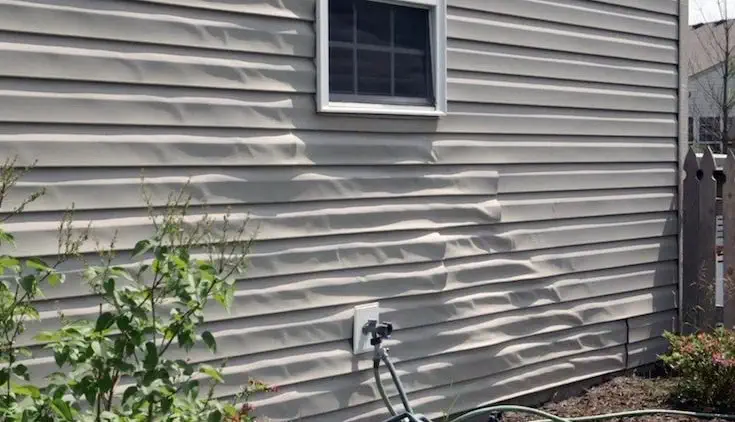
How do you know for sure that your siding is melting rather than just aging poorly? Thermal distortion has several distinct visual characteristics. The most common is “oil canning,” which looks like ripples or waves in the flat sections of the siding panels. This occurs because the vinyl is expanding beyond the limits of its installation. If the panels were nailed too tightly, they have nowhere to go when they get hot, causing them to bow outward.
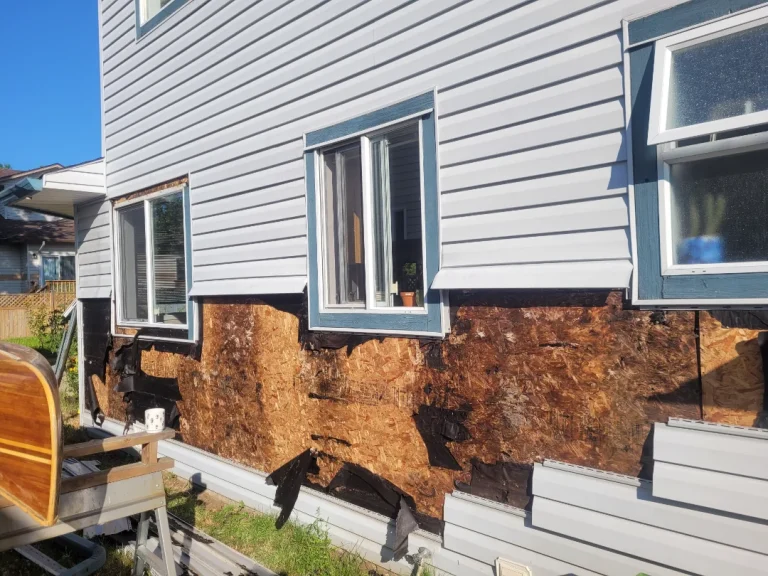
True melting, however, looks different. You will see localized “bubbles” or “blisters” on the surface of the vinyl. In severe cases, the characteristic wood-grain texture of the siding will vanish, leaving behind a smooth, shiny, or charred-looking surface. If the damage is caused by a window reflection, you will often see a distinct line or a “smear” of distortion that follows the path the sun takes across the wall during the hottest part of the day.
Another sign of heat damage is “buckling.” This is where the interlocking joints of the siding panels begin to pull apart or overlap incorrectly. When the vinyl softens, it loses its structural rigidity, and the weight of the panels above can cause the softened lower panels to compress. If you see these signs, it is important to address them quickly. Warped siding can create gaps that allow water to penetrate behind the panels, leading to mold, rot, and structural damage to your home’s sheathing.
The Physics of the “Death Ray” Effect
The science behind why your vinyl siding is melting is a fascinating interplay of optics and atmospheric pressure. When a double-paned window is manufactured, it is filled with gas and sealed. However, when the barometric pressure outside the window is higher than the pressure inside the sealed unit, the glass panes are pushed inward. This transformation from a flat surface to a concave one is subtle—often invisible to the naked eye—but it changes the window’s optical properties entirely.
In physics, a concave mirror focuses parallel rays of light into a single focal point. The sun, being so far away, provides rays that are essentially parallel. When these rays hit the bowed window, they converge. The point of convergence is where the heat is most intense. If your neighbor’s window is the perfect distance from your wall, that focal point lands directly on your vinyl siding. This is essentially the same principle as using a magnifying glass to start a fire.
Furthermore, the coatings on Low-E glass are designed to reflect infrared light specifically. Infrared light is the part of the spectrum that carries heat. By reflecting nearly 100% of this energy rather than absorbing it, the window becomes a powerful heat projector. While this saves the neighbor money on their cooling bill, it effectively “exports” their home’s thermal load onto your exterior walls. This has led to a growing number of legal disputes and requests for better building codes regarding window reflectivity.
Is Your Neighbor Responsible for Your Melting Siding?
One of the most frustrating aspects of this problem is that the cause often originates from someone else’s property. If your neighbor installs new, high-efficiency windows and your siding begins to melt a month later, who is at fault? This is a legal gray area that is currently being tested in courts across the United States. In most jurisdictions, property owners are responsible for “nuisance” or “trespass” if their property causes damage to another’s, even if that damage is caused by something as intangible as light.
However, proving liability can be difficult. The window manufacturer may argue that the window is performing as designed. The neighbor may argue they were simply trying to improve their home’s energy efficiency. In many cases, insurance companies are hesitant to get involved, often classifying “solar reflection damage” as a gradual occurrence or a “design flaw” rather than a covered peril like fire or wind damage.
The best approach is usually a diplomatic one. Most neighbors are unaware that their windows are causing damage. Approaching them with photos of the reflection and the damaged siding can often lead to a collaborative solution. This might involve the neighbor installing window screens or a specialized anti-reflective film on the outside of their glass. These solutions are often much cheaper than a full vinyl siding replacement and can preserve the relationship between neighbors.
Mitigation Strategies: How to Stop the Melting
If you have identified that solar reflection is the cause, you have several options to protect your home. The most effective method is to stop the reflection at its source. This means applying a non-reflective film to the *outside* of the offending window. These films diffuse the reflected light, breaking up the “hot spot” and spreading the energy over a much larger, harmless area. Many of these films are perforated, allowing the neighbor to still see out clearly while significantly reducing the glare.
Another option is the installation of full-coverage insect screens. By placing a screen over the entire exterior of the window, you create a physical barrier that breaks up the sunlight before it hits the glass and again after it reflects off the glass. This is often the most socially acceptable solution, as screens are a standard feature on most homes and don’t require the application of “ugly” films or coatings.
If you cannot convince your neighbor to modify their windows, you can take steps on your own property. Installing an awning or a strategically placed trellis can provide shade to the affected area. Similarly, planting fast-growing trees or tall shrubs can create a natural heat shield. These landscaping solutions not only protect your siding but also improve your home’s privacy and value. However, they may take time to grow, and you might need a more immediate fix in the meantime.
Recommended Mitigation Techniques
| Solution | Ease of Implementation | Effectiveness | Cost |
|---|---|---|---|
| Anti-Glare Window Film | Moderate | Very High | Low ($50 – $200) |
| Full-Surface Screens | Easy | High | Low ($30 – $100) |
| Landscaping (Trees/Shrubs) | Moderate | Permanent | Variable ($200+) |
| Awnings/Pergolas | Difficult | Moderate | High ($1,000+) |
| Siding Material Change | Difficult | Absolute | Very High ($5,000+) |
Vinyl Siding Replacement: Choosing the Right Product
If the damage is too extensive to ignore, you are likely looking at a vinyl siding replacement project. When choosing your new siding, you should consider products specifically engineered to resist heat distortion. Some manufacturers have developed “High-Temperature” vinyl lines. These products often use improved chemical stabilizers and different pigment technologies that reflect more infrared light rather than absorbing it.
Furthermore, you should pay close attention to the color of your new siding. Darker colors, such as deep blues, grays, and forest greens, are much more likely to absorb heat. If you are worried about melting, choosing a lighter color like cream, tan, or light gray can reduce the surface temperature of the siding by 20 degrees or more. This simple change can be enough to keep the material below its heat distortion threshold, even when exposed to moderate solar glare.
It is also vital to ensure the installation is performed correctly. As mentioned earlier, “oil canning” is often caused by siding that is nailed too tightly. Professional installers know to leave a small gap (about the thickness of a dime) between the nail head and the siding flange. This allows the panels to slide back and forth as they expand and contract with the temperature. Proper installation won’t stop the vinyl from melting if it’s hit by a “death ray,” but it will prevent the standard warping that many homeowners mistake for melting.
When to Pivot to Fiber Cement or Composite Siding
For some homeowners, the answer to “Why is my vinyl siding melting?” is simply that vinyl is the wrong material for their specific environment. If your home is situated in a way that makes it a constant target for reflections from multiple neighbors, or if you live in a climate with extreme heat, it might be time to move away from PVC altogether. Fiber cement siding, like James Hardie, is the most popular alternative.
Fiber cement is composed of non-combustible materials that simply do not react to the levels of heat generated by window reflections. It offers the same aesthetic appeal as wood or vinyl but with vastly superior durability. While it is more expensive to purchase and install, the peace of mind it provides can be worth the investment. You will never have to worry about “oil canning,” bubbling, or melting again. Additionally, fiber cement holds paint much better than vinyl, allowing for easier color changes in the future.
Another option is engineered wood siding. While it is made of wood fibers, it is treated with zinc borate and high-performance resins to resist rot, insects, and heat. While it could theoretically char if exposed to extreme flame, it does not melt or warp under solar reflection. These materials represent a “one and done” solution for homeowners who are tired of dealing with the limitations of plastic cladding.
Insurance Coverage and Warranties for Melted Siding
A common question after discovering damage is: “Will my insurance cover this?” Unfortunately, the answer is usually “No.” Most standard homeowner insurance policies cover sudden and accidental damage, such as a fire or a storm. Because siding melting is often seen as a “slow” process or a result of a design flaw in the environment, many adjusters will deny the claim. They may classify it as “wear and tear” or “faulty maintenance.”
Similarly, vinyl siding warranties are often quite specific about heat exposure. If you read the fine print of a standard vinyl warranty, you will likely find a clause that excludes damage caused by “unusual heat sources.” This includes reflections from windows, heat from grills, or proximity to fire pits. Manufacturers argue that the product is not defective; rather, it is being subjected to conditions it was never designed to handle.
However, there are exceptions. Some high-end siding manufacturers have started offering “reflection protection” in their premium warranties, recognizing that Low-E windows are a reality of modern life. Before you pay for a vinyl siding replacement out of pocket, it is always worth filing a claim and reviewing your warranty documents thoroughly. In some cases, if you can prove the melting happened during a single, unusually hot day, you might have a better chance of a successful insurance payout.
The Future of Siding: Solving the Thermal Crisis
The building industry is slowly waking up to the problem of solar-induced melting. Researchers are currently working on “cool-roof” technologies for siding—coatings that reflect the specific wavelengths of light that cause heat buildup without creating a blinding glare for neighbors. These advanced pigments could theoretically make even dark-colored vinyl as heat-resistant as lighter shades.
There is also a push for updated building codes. Some municipalities are considering regulations that limit the “specular reflectance” of exterior windows. By requiring glass to have a more matte finish or integrated diffusion patterns, the city can prevent the “death ray” effect at the architectural level. Until these changes become widespread, however, the burden of protection remains on the individual homeowner.
In the meantime, the rise of composite materials is likely to continue. As the price of fiber cement and engineered wood becomes more competitive with high-end vinyl, more homeowners are choosing the safer path. The trend toward high-density, low-reflection urban living means that the environmental stresses on our homes are only going to increase. Choosing materials that are “future-proof” against thermal distortion is a smart move for any long-term property owner.
The Importance of Professional Assessment
If you are looking at your warped exterior and asking “Why is my vinyl siding melting?”, don’t try to guess the solution on your own. A professional siding contractor who is experienced with thermal damage can perform a “glare audit.” They can identify exactly which window is causing the problem and at what time of day the damage occurs. This precision is necessary because you don’t want to replace your siding only to have the new panels melt a month later.
A professional can also determine if the issue is actually melting or if it’s a structural issue with the house’s framing or sheathing. Sometimes, what looks like melted siding is actually the result of moisture trapped behind the panels, causing the wood underneath to swell and push the vinyl out. A thorough inspection will ensure that your vinyl siding replacement addresses the actual cause of the problem, whether it’s thermal, structural, or moisture-related.
Furthermore, an expert can help you navigate the conversation with your neighbor. Having a professional report that identifies their window as the source of the damage provides a factual basis for the discussion. This takes the emotion out of the situation and focuses the conversation on technical solutions, such as installing a screen or film, rather than assigning blame.
Conclusion: Protecting Your Home from Thermal Failure
Vinyl siding remains a fantastic choice for many homes, offering a beautiful look and impressive longevity for the price. However, the modern world has introduced new challenges that the original inventors of PVC siding could never have imagined. The combination of high-efficiency windows and close-proximity housing has created a “perfect storm” for thermal distortion. By understanding the science behind the melting, you can take proactive steps to protect your home.
Whether you choose to mitigate the heat with window films, change your landscaping, or upgrade to a more heat-resistant material like fiber cement, the key is to act before the damage spreads. Your home is your most significant investment, and its exterior is the first line of defense against the elements—and the reflections of your neighbors. By staying informed and choosing the right materials, you can ensure your home stays beautiful and structurally sound for decades to come.
Ultimately, the answer to “Why is my vinyl siding melting?” is a reminder that our homes are part of a larger, interconnected ecosystem. Every change we make to one house, even an improvement like a new window, can have ripple effects on the houses around it. Being a mindful homeowner means looking beyond your own property lines and building with both efficiency and community in mind.