Vinyl Siding Thickness Standards: A Complete Engineering & Quality Guide
When embarking on a home renovation project, the nuances of exterior cladding often boil down to a few critical specifications. Among these, understanding vinyl siding thickness standards is perhaps the most vital step for a homeowner or contractor. It is not merely a matter of aesthetic preference; rather, it is a technical benchmark that dictates the longevity, impact resistance, and overall structural integrity of the home’s facade.
Historically, vinyl siding was viewed as a budget-friendly alternative to wood, often criticized for its tendency to sag or crack over time. However, modern manufacturing advancements have transformed this material into a high-performance solution. By adhering to rigorous vinyl siding thickness standards, manufacturers now produce panels that can withstand hurricane-force winds and extreme temperature fluctuations while maintaining their original shape.
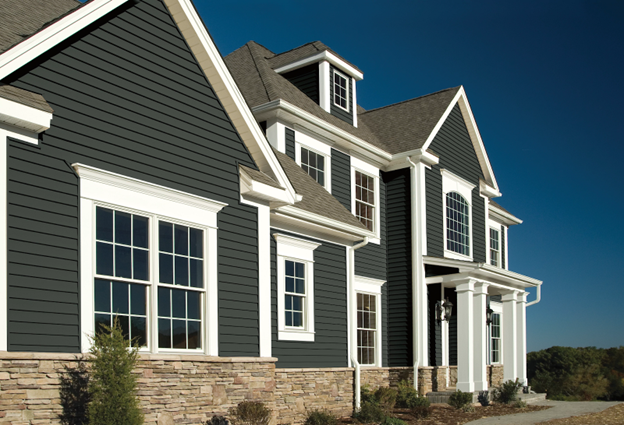
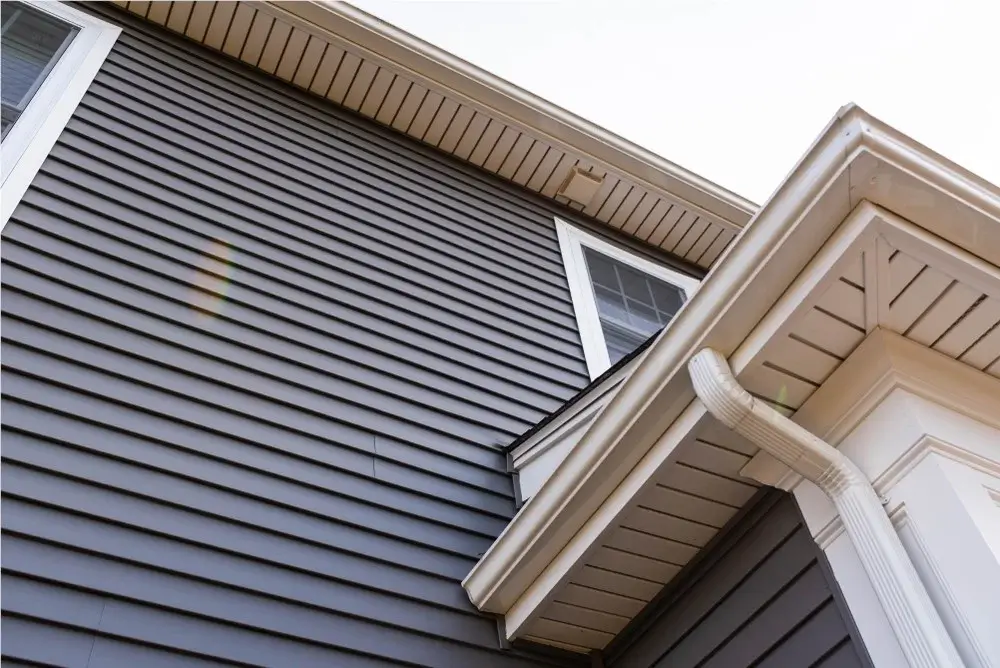
The thickness of a vinyl panel is measured in inches, typically ranging from 0.035 to 0.055. While a few hundredths of an inch may seem negligible to the naked eye, these increments represent significant jumps in quality. Choosing the wrong grade can lead to visible warping, known in the industry as “oil canning,” which occurs when thin panels expand and contract too aggressively under the sun’s heat.
Consequently, identifying the appropriate grade for your specific climate and budget is essential. In this exhaustive guide, we will analyze the engineering behind these measurements, the industry regulations that govern them, and why thickness serves as the primary indicator of a product’s value. Whether you are replacing old siding or building from scratch, these standards will serve as your roadmap to a durable exterior.
The Evolution of Vinyl Siding Manufacturing
To appreciate the current state of the industry, one must look back at the early days of PVC (polyvinyl chloride) siding. In the 1960s, the material was often brittle and prone to fading. The manufacturing process was rudimentary, leading to inconsistent panel thickness and frequent failure in the field.
Today, the process involves sophisticated co-extrusion or mono-extrusion techniques. Co-extrusion layers two different materials: a weather-resistant outer layer (capstock) and a high-strength inner layer (substrate). The precision required to maintain consistent vinyl siding thickness standards across a 12-foot panel is staggering, involving laser-guided sensors and automated quality control.
Furthermore, the chemical composition has improved. Manufacturers now add stabilizers and UV inhibitors like titanium dioxide to the mix. These additives ensure that even as the panels age, the thickness provides a stable foundation for the color and texture, preventing the material from becoming “chalky” or thin due to environmental erosion.
ASTM D3679: The Industry Benchmark
The American Society for Testing and Materials (ASTM) provides the definitive framework for vinyl siding quality. Specifically, ASTM D3679 is the standard specification for rigid poly vinyl chloride siding. This document outlines the minimum requirements for thickness, wind load resistance, and impact strength.
Under these guidelines, the absolute minimum thickness for a product to be legally sold as “vinyl siding” is 0.035 inches. However, most reputable manufacturers treat this as a “builder-grade” floor rather than a target. Adhering to these vinyl siding thickness standards ensures that the product has been tested for weatherability and flame spread.

It is important to note that ASTM standards are voluntary. Nevertheless, professional installers and savvy homeowners should always look for the ASTM certification on the packaging. This certification serves as a guarantee that the product meets or exceeds the basic requirements for safety and durability in residential construction.
Vinyl Siding Thickness Standards
| Grade Category | Thickness (Inches) | Common Usage | Expected Durability |
|---|---|---|---|
| Economy / Builder Grade | 0.035 – 0.040 | New construction, low-budget rentals, outbuildings. | Low; prone to sagging and impact damage. |
| Standard Grade | 0.042 | Typical residential retrofits and mid-range homes. | Moderate; reliable performance in mild climates. |
| Premium Grade | 0.044 – 0.046 | Owner-occupied homes, harsh climates. | High; excellent wind resistance and rigidity. |
| Ultra-Premium Grade | 0.048 – 0.055 | High-end luxury homes, coastal areas. | Maximum; mimics wood appearance, superior impact resistance. |
Understanding Economy Grade Panels
Economy grade panels, often measuring between 0.035 and 0.040 inches, are frequently found in “spec” homes or large-scale apartment developments where cost is the primary driver. While they meet the baseline vinyl siding thickness standards, they offer the least resistance to the elements.
These thin panels are more susceptible to “rattling” during high winds. Because they lack the rigidity of thicker alternatives, they can easily be dented by a stray hailstone or a misplaced lawnmower rock. Furthermore, they tend to follow the contours of the wall, meaning any imperfections in the home’s framing will be highly visible.
However, for a secondary structure like a detached shed or a temporary workshop, economy grade might be sufficient. It provides the same water-shedding capabilities as thicker siding but lacks the long-term aesthetic resilience required for a primary residence. Always weigh the upfront savings against the potential for early replacement.
The Dominance of Standard Grade (0.042″)
The 0.042-inch panel is widely considered the industry standard. Most major manufacturers focus their primary product lines around this measurement because it offers an ideal balance between weight, cost, and durability. It is thick enough to resist sagging but light enough for easy installation.
In many regions, 0.042″ siding is the default choice for vinyl siding replacement. It provides a respectable shadow line—the depth of the overlap between panels—which contributes to the home’s curb appeal. Moreover, it typically carries a solid warranty, often spanning 25 to 50 years, depending on the manufacturer’s confidence in their polymer blend.
For the average homeowner, moving from an economy grade to a standard grade is the single most cost-effective upgrade possible. The price difference is often marginal compared to the significant increase in lifespan and visual quality. It is the baseline for what most professionals recommend for a long-term investment.
Why Thickness Matters: The Physics of Protection
To understand why vinyl siding thickness standards are so emphasized, one must look at the physics of the material. PVC is a thermoplastic, meaning it expands and contracts with temperature changes. A thicker panel has more mass, which allows it to distribute thermal stress more evenly across its surface.
In addition to thermal management, thickness directly correlates with “wind load” capacity. Wind load refers to the amount of pressure a panel can withstand before it is ripped from the nailing hem. Thicker panels generally feature a reinforced hem—sometimes doubled over—which provides a more secure attachment point to the wall sheathing.
Rigidity is another crucial factor. A thin panel is flexible, which might seem beneficial, but in the context of a wall, flexibility leads to “oil canning.” This is the wavy, distorted appearance that plagues low-quality vinyl jobs. Thicker panels act more like a plank of wood, maintaining a flat, straight profile even over slightly uneven wall surfaces.
Impact Resistance and Hail Protection
One of the most common causes of siding failure is impact damage. Whether it is a summer hailstorm or a child’s rogue baseball, the exterior of your home is constantly under threat from kinetic energy. Thicker panels are naturally better at absorbing and dispersing this energy.
While vinyl is designed to be somewhat resilient, a thin 0.040″ panel is much more likely to crack or puncture upon impact than a 0.050″ ultra-premium panel. In regions prone to severe weather, adhering to higher vinyl siding thickness standards is not just a luxury; it is a necessary form of insurance against repair costs.
Furthermore, many premium thick panels are backed with foam insulation. This “contoured” foam fits perfectly behind the vinyl, providing a solid substrate that further increases impact resistance. When the vinyl is backed by foam, it becomes nearly impossible to dent or crack, mimicking the solidity of fiber cement or real cedar.
The Visual Impact of Shadow Lines
Aesthetics play a massive role in home value. One of the primary reasons homeowners choose thicker siding is the depth of the “shadow line.” A shadow line is the shadow cast by the bottom edge of a siding panel onto the one below it. This depth creates visual interest and gives the home a more substantial, high-end look.
Thin panels often have shallow profiles, resulting in a flat, “plastic” appearance. In contrast, premium panels built to higher vinyl siding thickness standards can support deeper profiles and more aggressive wood-grain textures. These panels can convincingly imitate the look of hand-split cedar shakes or traditional clapboard.
When you view a home from the street, the human eye perceives quality through these shadows and textures. A thicker panel allows for a more pronounced “butt edge,” which is the thickness of the panel at its lowest point. A larger butt edge creates a more dramatic shadow, which is a hallmark of luxury exterior design.
Regional Considerations and Climate Adaptation
Climate should be the primary driver of your siding choice. In the American Southwest, where UV exposure is extreme, the thickness of the panel helps prevent the material from warping under 110-degree heat. Conversely, in the Northeast, the concern is the “freeze-thaw” cycle.
In cold climates, vinyl becomes more brittle. If a homeowner opts for a sub-standard thickness in a snowy region, the siding is much more likely to shatter if struck during the winter. By choosing a panel that exceeds basic vinyl siding thickness standards, you ensure that the material retains enough structural integrity to survive the cold.
Coastal areas present a different challenge: wind. High-velocity hurricane zones (HVHZ) often have specific building codes requiring siding to withstand 150+ mph winds. In these scenarios, thickness is often paired with specialized “roll-over” nailing hems to prevent the panels from being lifted off the house by negative pressure.
Comparing Vinyl to Fiber Cement and Wood
When discussing thickness, it is helpful to compare vinyl to its competitors. Fiber cement, such as James Hardie siding, is significantly thicker and heavier, usually around 0.3125 inches. However, fiber cement is a different material entirely, composed of cellulose fibers and cement.
While vinyl is thinner, it is also much lighter and easier to install. The goal of premium vinyl siding thickness standards is to close the “quality gap” between vinyl and fiber cement. By reaching thicknesses of 0.050″ or 0.055″, vinyl manufacturers can offer a product that feels nearly as solid as fiber cement but requires no painting and significantly less maintenance.
Wood siding is also thick, but it is prone to rot, insects, and moisture absorption. Vinyl, regardless of its thickness, is an inorganic material that will never rot. Therefore, a high-quality, thick vinyl panel offers the best of both worlds: the robust look and feel of wood with the maintenance-free benefits of high-grade polymers.
The Relationship Between Thickness and Insulation
A common misconception is that thicker vinyl siding alone will provide significant R-value (insulation). In reality, the difference in R-value between a 0.040″ and a 0.050″ panel is negligible. PVC is not a particularly good insulator on its own.
However, thickness plays a role in “thermal bridging.” Thicker panels can be engineered with larger “voids” or can be paired with integrated foam backing. This is known as insulated vinyl siding. In these products, the vinyl skin is bonded to a layer of expanded polystyrene (EPS) foam.
In this configuration, the vinyl siding thickness standards are still important because the outer skin needs to be durable enough to protect the foam. The foam provides the insulation, while the thick vinyl provides the “armor.” Together, they create a system that can improve a home’s energy efficiency by up to 20%, reducing the strain on HVAC systems during peak seasons.
Installation Challenges with Thicker Panels
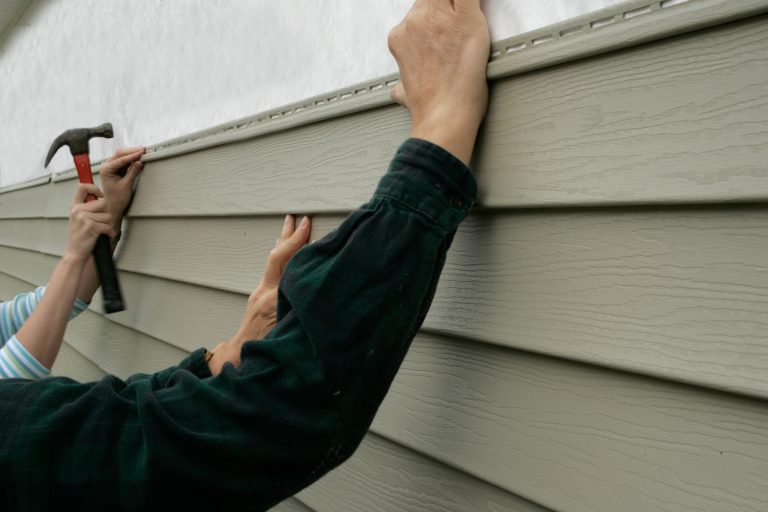
One might assume that thicker is always better for the installer, but that is not always the case. Thicker panels are more rigid, which makes them harder to “snap” together, especially in tight corners or around intricate window trim. An installer used to thin, flexible siding may find premium grades more labor-intensive.
Furthermore, thicker siding requires longer nails and more precise spacing. Because the material is heavier, the nailing hem must be perfectly secured to the studs to prevent long-term drooping. Despite these challenges, professional contractors generally prefer thicker panels because they result in fewer callbacks for repairs and a much more professional finished look.
The “lock” mechanism is also more robust in thicker panels. The lock is where the top of one panel clicks into the bottom of the next. In premium panels, this lock is often oversized and reinforced. This ensures that the panels stay connected even when the house settles or when subjected to extreme vibrations from nearby traffic or storms.
How to Verify Vinyl Siding Thickness
As a consumer, how can you be sure you are getting what you paid for? You cannot simply look at a panel and tell the difference between 0.042″ and 0.044″ without specialized tools. The most common tool used in the industry is a digital micrometer.
When measuring siding, it is important to measure the “flat” part of the panel, not the nailing hem or the lock, as these areas are often engineered to be thicker or thinner than the main body. Manufacturers are required to print the specifications on the box, and often the product name itself corresponds to a specific grade within their catalog.
Another way to verify vinyl siding thickness standards is to check the manufacturer’s spec sheet, usually available on their website. Look for the “Physical Properties” section. If a manufacturer is vague about their thickness, it is usually a sign that the product is a lower-grade economy option. Reputable brands like CertainTeed, Mastic, or Royal Siding are transparent about these measurements.
The Cost-Value Proposition
Investing in thicker siding is almost always a smart financial move. While the initial material cost might be 15% to 30% higher for a premium grade compared to a standard grade, the “cost per year of service” is much lower. Thinner siding may need replacement in 15 years due to storm damage or fading, whereas premium siding can easily last 40 years.
Additionally, siding is one of the top five home improvement projects for Return on Investment (ROI). According to various “Remodeling Magazine” reports, homeowners can expect to recoup 70% to 80% of the cost of a siding replacement at the time of sale. If the siding is a premium thickness, it increases the home’s “perceived value,” making it more attractive to potential buyers.
Lower-grade siding can actually be a deterrent for buyers who recognize the signs of oil canning or fading. By choosing a product that adheres to high vinyl siding thickness standards, you are essentially future-proofing your home’s exterior against both the elements and the real estate market.
Maintenance and Longevity of Premium Siding
Regardless of thickness, vinyl siding is touted as low-maintenance. However, “low maintenance” does not mean “no maintenance.” Thicker panels are easier to clean because they can withstand higher pressure from a garden hose or a mild power wash without the risk of denting or water being forced behind the panel.
Over time, dirt and organic growth like mildew can accumulate on the surface. Because thicker panels have deeper textures, they may hold onto dirt slightly more than a smooth, thin panel. A simple solution of water and white vinegar, or a dedicated vinyl siding cleaner, is usually enough to restore the original luster.
The longevity of the product is also tied to how the thickness interacts with color. “Premium” thickness often indicates a “premium” color process. Manufacturers use more expensive pigments in their thicker lines to ensure that the color goes all the way through the panel. If a thick panel is scratched, the color remains consistent, unlike thin panels where a scratch might reveal a different colored substrate underneath.
Environmental Impact of Thick Vinyl Siding
From a sustainability standpoint, the argument for vinyl siding is complex. While it is a plastic product, its longevity is a key factor in its environmental footprint. A siding product that lasts 50 years is inherently more sustainable than a product that needs to be replaced every 15 years.
Thicker siding also contributes to better home insulation (especially when foam-backed), which reduces energy consumption. Furthermore, many manufacturers are now incorporating recycled PVC into the substrate layer of their thicker panels. This “closed-loop” manufacturing helps reduce the amount of plastic waste that ends up in landfills.
When it finally comes time to replace the siding, PVC is recyclable. Many communities have dedicated recycling programs for construction waste. Because thick panels are denser, they provide a higher quality of regrind material for future plastic products, contributing to a more circular economy in the construction industry.
Navigating Warranties and Guarantees
A manufacturer’s warranty is often a direct reflection of their confidence in their vinyl siding thickness standards. You will notice that “lifetime” warranties are almost exclusively reserved for products with a thickness of 0.044″ or higher. Economy products often have limited 10 or 20-year warranties that are not transferable to the next homeowner.
Pay close attention to the “hail clause” in a warranty. Many manufacturers will cover the cost of materials if the siding is damaged by hail, but only if the siding is of a certain thickness. This is because they know their thicker panels are significantly more likely to survive a storm without catastrophic failure.
Another critical aspect is the “fade warranty.” High-quality thick panels usually come with a guarantee that the color will not change more than a few “Hunter units” (a measurement of color change) over several decades. This level of protection is rarely found in thin, builder-grade materials, which can fade unevenly depending on which side of the house faces the sun.
Common Myths About Vinyl Siding Thickness
One common myth is that “thicker is always heavier and harder on the house’s structure.” While thicker siding is heavier, the difference is negligible in the context of a home’s framing. A standard house can easily support the weight of the thickest vinyl siding available without any structural modifications.
Another myth is that “all 0.042 panels are the same.” This is false. Two panels can have the same thickness but different chemical compositions. One might use high-grade virgin PVC while the other uses a high percentage of low-quality fillers. Always look at the total package: thickness, chemical stabilizers, and the reputation of the brand.
Finally, some believe that “siding thickness doesn’t matter if you have a good installer.” While a great installer can make thin siding look better, they cannot change the laws of physics. They cannot prevent a thin panel from sagging in extreme heat or cracking during a hailstone impact. A good installer will actually be the first person to recommend adhering to higher vinyl siding thickness standards.
Conclusion: Choosing the Right Grade for Your Home
In summary, the decision regarding which siding to purchase should be rooted in a deep understanding of vinyl siding thickness standards. It is the most reliable metric for determining how a product will perform over the long haul. While the allure of “builder-grade” pricing is strong, the hidden costs of maintenance, repairs, and premature replacement far outweigh the initial savings.
For most homeowners, the “Standard” 0.042-inch panel is the minimum acceptable quality, while the “Premium” 0.044 to 0.046-inch range offers the best value for long-term durability and aesthetic appeal. If you live in a coastal area or a region with frequent severe weather, investing in “Ultra-Premium” 0.050+ panels is a wise defensive strategy for your property.
By prioritizing thickness, you are ensuring that your home remains protected, energy-efficient, and visually stunning for decades to come. Before you sign a contract, ask for samples, check the micrometer readings, and verify that the product meets ASTM D3679. Your home’s exterior is its first line of defense; make sure that defense is as thick and robust as possible.