Vinyl Siding Wind Resistance Ratings: A Complete Homeowner’s Guide
Homeowners often view exterior cladding primarily through the lens of curb appeal and color palettes. However, the structural integrity of a building envelope depends heavily on how the facade interacts with natural forces. When planning a renovation, understanding **vinyl siding wind resistance ratings** is essential for ensuring long-term durability and safety against the elements. These ratings serve as a benchmark for how well a specific product can withstand the literal “tug-of-war” that occurs between high-velocity air and the side of a house.
Wind doesn’t just push against a home; it creates complex pressure differentials that can pull panels right off the wall. This phenomenon is known as negative pressure or wind uplift. Without high-quality materials and proper installation, even moderate storms can cause significant damage. Consequently, homeowners in coastal regions or open plains must prioritize engineering specifications over purely cosmetic features.
Modern manufacturing has evolved significantly since the early days of PVC cladding. Today, top-tier vinyl products are engineered to meet rigorous performance standards that rival more expensive materials. By focusing on the science behind the ratings, you can make an informed decision that protects your investment for decades. This guide explores the intricate details of how wind ratings are calculated and what they mean for your home’s security.
The Physics of Wind and Exterior Cladding
To appreciate the importance of resistance ratings, one must first understand the physics of wind. When wind hits a building, it creates positive pressure on the windward side. As the air flows around the corners and over the roof, it creates a vacuum effect on the leeward side and the side walls. This negative pressure is often more destructive than the direct impact of the wind itself.
Vinyl siding is essentially a series of interlocking panels hung from a substrate. If the air pressure inside the wall cavity or behind the panel becomes significantly different from the pressure outside, the panel can “oil-can” or rattle. In extreme cases, the pressure difference is enough to unlock the panels or pull the fasteners through the nailing hem. This leads to a catastrophic failure where the siding is stripped from the house.
Aerodynamics also play a role in how wind interacts with different siding profiles. For instance, a flatter profile may behave differently under high-velocity gusts compared to a deep-shadow Dutch lap style. Manufacturers test these variations extensively to ensure that the locking mechanisms and thickness of the vinyl can handle the physical strain of varying wind speeds.
Defining Standardized Testing Protocols
The industry relies on standardized testing to ensure that claims of “storm-proof” or “high-wind” siding are backed by empirical data. The primary organization responsible for these standards in North America is ASTM International. Their testing protocols provide a level playing field for comparing different products and brands across the market.
ASTM D3679 is the standard specification for rigid poly(vinyl chloride) (PVC) siding. This comprehensive standard covers everything from dimensions and impact resistance to weatherability and wind load. Within this framework, manufacturers must demonstrate that their products can withstand specific pressures without disengaging from the wall or sustaining permanent deformation.
Furthermore, testing is usually conducted in a laboratory setting where air pressure is mechanically applied to a section of a wall clad in the siding. These tests simulate both the sustained pressure of a steady wind and the sudden, intense bursts associated with gusting storms. This dual-focus ensures the siding can survive a variety of weather events, from summer thunderstorms to late-season hurricanes.
Vinyl siding wind resistance ratings
When you look at the technical specifications of a siding product, the **vinyl siding wind resistance ratings** are typically expressed in miles per hour (MPH) or pounds per square foot (PSF). Most standard vinyl siding is rated to withstand winds up to 110 MPH. This is sufficient for the vast majority of residential areas in the United States, providing a robust barrier against typical weather patterns.
However, premium products are often engineered for much higher thresholds. It is not uncommon to find high-performance vinyl siding rated for 150 MPH to 200 MPH or higher. These products are specifically designed for “High-Velocity Hurricane Zones” (HVHZ), such as those found in Florida or along the Gulf Coast. The rating tells you the maximum wind speed the product can survive under ideal installation conditions.
It is crucial to remember that these ratings are not just about the plastic itself. They reflect the performance of the entire “system,” which includes the thickness of the panel, the design of the locking hem, and the quality of the fasteners. A high rating is an indicator of superior engineering and material density, suggesting a product that will remain stable even when the environment becomes volatile.
The Role of ASTM D5206 in Modern Manufacturing
ASTM D5206 is the specific “Standard Test Method for Windload Resistance of Rigid Poly(Vinyl Chloride) (PVC) Siding.” While D3679 sets the general rules, D5206 is the actual procedure used to determine those crucial wind ratings. This test involves a pressure chamber where a siding assembly is subjected to increasing levels of static air pressure.
During this test, engineers look for two types of failure: structural failure and functional failure. Structural failure occurs when the siding rips, breaks, or the nails pull through the hem. Functional failure occurs if the panels unlock from one another, even if they stay attached to the wall. To achieve a high rating, the siding must resist both types of failure at elevated pressure levels.
In addition to static pressure, some manufacturers opt for “cyclic” pressure testing. This simulates the rhythmic pounding of wind gusts, which can fatigue materials over time. By passing these rigorous ASTM protocols, manufacturers can provide homeowners with a quantitative assurance of the product’s capability to protect the underlying structure.
Miles Per Hour vs. Pounds Per Square Foot
Conversion between MPH and PSF can be confusing for many homeowners. Wind speed (MPH) is a measurement of how fast the air is moving, while wind pressure (PSF) is a measurement of the force that moving air exerts on a surface. The relationship between the two is exponential; doubling the wind speed results in a fourfold increase in pressure.
| Wind Speed (MPH) | Approximate Pressure (PSF) | Typical Rating Category |
|---|---|---|
| 90 MPH | 20-25 PSF | Standard Builder Grade |
| 110 MPH | 30-35 PSF | Standard Residential Grade |
| 150 MPH | 55-65 PSF | High-Wind Performance Grade |
| 200+ MPH | 90+ PSF | Extreme/Hurricane Grade |
As indicated in the table, the jump from 110 MPH to 150 MPH represents a massive increase in the physical stress the siding must endure. This is why high-wind rated products often feature specialized “double-nailing” hems or reinforced locking mechanisms. Understanding this conversion helps homeowners realize that a “slight” increase in a wind rating actually represents a significant increase in structural strength.
Impact of Panel Thickness on Structural Integrity
The thickness of a vinyl panel is one of the most reliable predictors of its wind resistance. Standard economy-grade siding is usually around 0.040 inches thick. While this meets basic codes, it lacks the rigidity needed to resist “fluttering” in high winds. Thicker panels, ranging from 0.044 to 0.055 inches, provide more “heft” and are less likely to deform under pressure.
Increased thickness also allows for a more robust nailing hem. The hem is the part of the siding where the nails are driven into the wall. If the hem is too thin, the wind can cause the nail head to “tear” through the vinyl, leading to a blow-off. Premium siding often features a “rolled-over” or “double” hem, effectively doubling the thickness of the vinyl at the point of attachment.
Furthermore, thicker panels tend to be heavier, which sounds like a disadvantage during installation but is a major benefit during a storm. A heavier panel has more inertia and is less likely to be vibrated loose by the rhythmic pulsing of wind. Consequently, choosing a thicker gauge is one of the easiest ways to ensure your **vinyl siding wind resistance ratings** translate to real-world durability.
The Locking Mechanism: Ensuring Seams Stay Shut
The lock is the unsung hero of vinyl siding. Each panel has a groove at the bottom that hooks into the top of the panel below it. This interlocking system creates a continuous “curtain” of protection. If this lock fails or unzips, the wind can get behind the panels, creating an internal pressure that forces the siding away from the wall.
High-wind rated siding often features an enhanced locking design. Some manufacturers use a “positive lock,” which makes an audible click when the panels are joined. This ensures that the connection is secure. Others use an oversized “hook” shape that provides more surface area for the panels to grip each other, making it nearly impossible for them to be pulled apart by wind suction.
In addition to the physical shape of the lock, the tolerances must be precise. If the lock is too loose, it will rattle; if it is too tight, it won’t allow for the natural thermal expansion and contraction of the PVC. A well-engineered lock manages these conflicting needs, maintaining a tight seal while allowing the house to “breathe” and move as temperatures change.
Installation Variables and Fastener Frequency
Even the highest-rated siding will fail if it is not installed correctly. **Vinyl siding wind resistance ratings** are based on the assumption that the installer follows the manufacturer’s specific nailing instructions. This includes the type of nail used, the depth of the nail, and most importantly, the spacing between nails.
Standard installation typically requires a nail every 16 inches. However, in high-wind zones, this frequency often increases to every 8 or 12 inches. Increasing the number of fasteners distributes the wind load more evenly across the panel, reducing the stress on any single attachment point. If an installer cuts corners by spacing nails too far apart, the wind rating effectively becomes meaningless.
Another critical factor is “floating” the siding. Vinyl should never be nailed tight to the wall. Instead, a 1/32-inch gap should be left between the nail head and the siding hem. This allows the panel to move laterally as it expands in the sun. If the siding is nailed too tight, it will buckle and warp, creating gaps where wind can catch the edge and tear the panel away.
Understanding Negative Pressure and Suction
Most people assume wind damage is caused by the wind pushing on the house. In reality, most siding blow-offs are caused by “suction” or negative pressure. As wind speeds increase, the pressure drops on the sides and back of the house (similar to how an airplane wing generates lift). This creates a vacuum that literally tries to suck the siding off the walls.
This is particularly dangerous at the corners of a building. Air turbulence is highest at these points, creating localized zones of extreme negative pressure. To combat this, high-performance siding systems include specialized corner posts and trim pieces designed to deflect wind and maintain the seal around the perimeter of the wall.
Manufacturers account for this by testing their products in “negative pressure chambers.” They ensure the locking mechanisms can resist being pulled outward from the substrate. When reviewing **vinyl siding wind resistance ratings**, always look for products that specifically mention their performance under negative load, as this is the most common cause of catastrophic failure during hurricanes and tornadoes.
Regional Building Codes and High-Wind Zones
Local building codes are the baseline for what is legally required in your area. Organizations like the International Code Council (ICC) set standards that municipalities then adopt. In many coastal regions, the building code is much stricter regarding wind resistance than it is in inland, sheltered areas.
For example, parts of Florida and the Carolinas are designated as “High-Velocity Hurricane Zones.” In these areas, siding must not only have a high wind rating but also must be tested for impact resistance from flying debris. If you are replacing your siding, your contractor should be intimately familiar with the local ASCE 7 (American Society of Civil Engineers) wind maps, which dictate the design wind speeds for your specific zip code.
Ignoring these codes can lead to more than just storm damage. It can result in failed inspections, fines, and even the denial of insurance claims. Insurance companies are increasingly requiring that homes be retrofitted with materials that meet current wind standards to mitigate their risk. Therefore, verifying the **vinyl siding wind resistance ratings** against local codes is a necessary step in any replacement project.
Comparative Performance: Traditional vs. Reinforced Vinyl
Not all vinyl is created equal. Standard vinyl is a single-wall extrusion of PVC. While effective, it has limitations in terms of rigidity. Reinforced vinyl siding, often called “insulated siding,” features a layer of rigid foam backing (usually expanded polystyrene) that is permanently bonded to the panel.
This foam backing serves a dual purpose. First, it provides thermal insulation (R-value). Second, and more importantly for wind resistance, it provides structural support to the vinyl. The foam acts as a shock absorber and a bridge, spreading wind loads across a wider surface area. This makes the panel significantly more rigid and less likely to bend or “oil-can” under pressure.
Because reinforced siding is so stiff, it is much harder for the wind to get an “edge” and begin the process of pulling the panel away. Many insulated siding products carry much higher **vinyl siding wind resistance ratings** than their non-insulated counterparts. If you live in an area prone to high winds, the extra cost of reinforced or insulated siding is often a wise investment for the peace of mind it provides.
How Environmental Factors Degrade Wind Performance
It is important to understand that wind resistance is not a static quality. Over time, exposure to the sun’s ultraviolet (UV) rays can affect the physical properties of PVC. Low-quality vinyl may become brittle over decades of sun exposure. Brittle siding is far more likely to crack or shatter when hit by a wind-blown object or when stressed by high-pressure gusts.
Modern high-end vinyl uses advanced chemical stabilizers, such as titanium dioxide, to reflect UV rays and keep the vinyl flexible. Flexibility is key to wind resistance; a panel that can slightly give and then snap back into place is much more durable than one that is rigid and prone to cracking. When researching **vinyl siding wind resistance ratings**, consider the long-term weatherability of the product.
Furthermore, extreme temperature fluctuations can stress the attachment points. In very cold climates, vinyl becomes more rigid and sensitive to impact. If a high-wind event occurs in the dead of winter, the siding is under different stresses than it would be during a summer hurricane. Choosing a product with high-quality resins ensures the wind rating remains valid throughout the entire lifespan of the siding.
Thermal Expansion and Wind-Load Interaction
Vinyl siding is unique because it is designed to move. A 12-foot panel of vinyl can expand or contract by as much as 1/2 to 3/4 of an inch depending on the temperature. This movement is why the siding is hung from slots rather than being nailed through holes. This dynamic nature creates a unique challenge for wind resistance.
If a panel has expanded significantly in the heat, it may be under tension. If a high-wind event occurs simultaneously, the combined stress can be substantial. Conversely, in cold weather, the siding contracts and may have more “play” or “rattle” in the locks. Engineers must design the locking systems to be secure at both ends of the temperature spectrum.
High-quality manufacturers conduct testing at various temperature stages to ensure their **vinyl siding wind resistance ratings** hold up regardless of the season. They also provide detailed “gap charts” to installers, ensuring that the siding has enough room at the corner posts to expand without buckling, which would otherwise create a vulnerability to wind uplift.
The Criticality of Proper Sheathing Support
The siding is only as strong as the wall it is attached to. If the underlying sheathing (usually OSB or plywood) is rotted, water-damaged, or too thin, the nails will not have enough “withdrawal resistance.” This means the wind can pull the nail itself out of the wood, rather than pulling the siding off the nail.
Before installing new siding, it is imperative to inspect the substrate. Any soft spots or signs of mold indicate that the wood has lost its structural integrity. For maximum wind resistance, the sheathing should be at least 7/16-inch thick and properly fastened to the house studs. If the sheathing is compromised, the best **vinyl siding wind resistance ratings** in the world won’t prevent the siding from blowing off during a storm.
In some high-wind regions, installers use specialized “ring-shank” nails or even screws to increase withdrawal resistance. These fasteners have ridges that grip the wood fibers, making them significantly harder to pull out. This level of attention to the substrate is what separates a standard siding job from a high-performance, storm-resistant installation.
Identifying High-Performance Vinyl Product Lines
When shopping for siding, you will encounter various brands like CertainTeed, Mastic (Ply Gem), Alside, and James Hardie (though Hardie is fiber cement). Within each of these brands, there are distinct tiers of products. Generally, the “Entry Level” products will have the minimum 110 MPH rating, while the “Architectural” or “Premium” lines will boast the higher wind ratings.
Look for marketing terms like “Double-Nailing Hem,” “Reinforced Lock,” or “Heavy-Duty Gauge.” These are usually indicators of a product designed with wind resistance in mind. For example, some premium lines feature a “rolled-over” nail hem that provides 135% more thickness at the point of attachment. This simple engineering change can increase the wind rating from 110 MPH to 180 MPH.
Don’t be afraid to ask for the “Technical Data Sheet” (TDS) for any product you are considering. This document will list the specific ASTM test results, including the PSF and MPH ratings. It will also specify the required nailing pattern to achieve those ratings. This data allows you to make a direct, objective comparison between different brands and models.
Post-Storm Inspection and Structural Maintenance
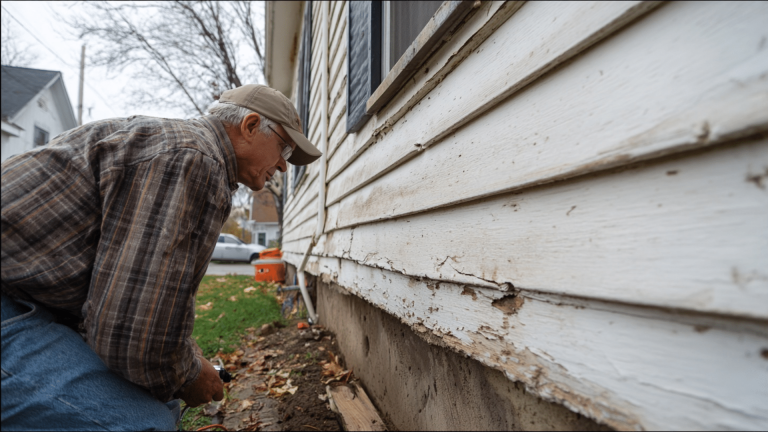
Even if your siding survived a major wind event without blowing off, it’s important to conduct a post-storm inspection. High winds can cause “hidden” damage. For instance, the panels may have shifted or become partially unzipped from the locks. If left uncorrected, the next storm could easily finish the job and strip the siding away.
Check for “creaking” or “rattling” sounds during moderate breezes. This is often a sign that the panels have loosened or that a nail has pulled slightly out of the substrate. Also, look for “stress whitening” on the vinyl, which appears as pale marks on the plastic where it was bent or stressed. This indicates the material has been fatigued and may need replacement.
Proactive maintenance is the best way to ensure your **vinyl siding wind resistance ratings** continue to protect your home. Ensuring that gutters are clear (to prevent water from rotting the sheathing) and that trim pieces are secure will maintain the aerodynamic integrity of the entire system. A small repair today can prevent a total siding failure tomorrow.
Cost Implications of High-Wind Rated Siding
It is a reality of construction that higher performance usually comes with a higher price tag. Moving from a standard 0.040-inch panel to a premium 0.046-inch or 0.050-inch panel can increase material costs by 20% to 50%. However, this cost should be viewed in the context of long-term value and risk mitigation.
The cost of a “blow-off” is not just the price of new siding. It includes the labor of removal, potential damage to the underlying sheathing, and the risk of water intrusion into the home’s interior. In many cases, a single avoided insurance claim more than pays for the upgrade to high-wind rated materials. Additionally, some insurance companies offer premium discounts for homes with certified high-wind cladding.
Labor costs for installing high-wind rated siding may also be slightly higher. This is because the installation requires more fasteners and more precise attention to detail. However, when you consider that siding is a 30-year investment, the “per year” cost of upgrading to a better wind rating is negligible. It is one of the most cost-effective ways to harden your home against climate-related risks.
Decoding Manufacturer Warranties and Wind Limits
Homeowners often assume a “Lifetime Warranty” covers everything. However, if you read the fine print, you will find that most warranties have specific exclusions for “Acts of God,” which often include winds exceeding a certain velocity. If your siding is rated for 110 MPH and a storm brings 120 MPH gusts, the manufacturer may not be liable for the damage.
Some premium warranties offer “Wind Speed Protection” up to a certain limit. For example, a manufacturer might guarantee the siding won’t blow off in winds up to 130 MPH, provided it was installed according to their high-wind specifications. This is a powerful testament to the company’s confidence in their product’s **vinyl siding wind resistance ratings**.
Always verify the warranty requirements before the installation begins. Some warranties are only valid if the siding is installed by a certified contractor or if specific brands of accessories (like house wrap and tape) are used. Understanding these legal nuances ensures you aren’t left holding the bill after a major storm event.
Future Innovations in Aerodynamic Siding Design
The industry is not standing still. Researchers are currently using wind-tunnel testing—similar to how cars and airplanes are designed—to create even more aerodynamic siding profiles. By smoothing out the edges and changing the angles of the laps, manufacturers can reduce the amount of “drag” and “lift” the wind exerts on the panels.
We are also seeing the emergence of “smart” siding materials. These might include composite resins that change their rigidity based on the temperature or fasteners that “lock” tighter when under tension. While some of these technologies are still in the prototype phase, the trend is clear: the future of siding is focused on extreme environmental resilience.
As climate patterns become more volatile and storms more intense, the demand for high-performance cladding will only increase. By staying informed about the current state of **vinyl siding wind resistance ratings**, you are positioning yourself to take advantage of these technological leaps, ensuring your home remains a safe haven regardless of the weather outside.
Expert Recommendations for Homeowner Protection
In summary, choosing the right siding involves more than picking a color you love. It is about understanding the unseen forces of nature and selecting a product engineered to withstand them. Always start by identifying your local wind zone and ensuring your chosen product exceeds the minimum requirements for your area.
Prioritize panel thickness and locking mechanism design. A thicker panel with a reinforced nail hem is your best defense against negative pressure and blow-offs. Furthermore, never underestimate the importance of the installer. A product is only as good as the nails holding it to the house. Choose a contractor who understands ASTM standards and local building codes.
Finally, consider the long-term benefits of reinforced or insulated siding. The added structural support and energy efficiency often outweigh the initial price increase. By focusing on high-quality **vinyl siding wind resistance ratings**, you are investing in the longevity, safety, and value of your home for years to come.